
Meet Azurite
A Stone With a Color All Its Own
Azurite crystal meaning often centers on intuition, clear thinking, and the quiet confidence to trust what you notice.
Its deep blue color is hard to ignore, yet its natural surface keeps every piece grounded and individual. For many people, that balance makes azurite feel calming, expressive, and visually powerful. However, there is no single correct way to connect with it.
You can appreciate azurite as a mineral, a meditation companion, a collectible carving, or simply a beautiful part of your home. When a stone invites you to slow down and look closer, that can be meaningful all by itself.
- Natural originA copper carbonate mineral with vivid blue color
- Personal connectionEnjoy it through reflection, collecting, or display
- Gentle handlingKeep it dry and protect it from scratches
Meaning and Reflection
Azurite Crystal Meaning and Personal Reflection
In metaphysical traditions, azurite crystal meaning is often associated with insight, intuition, and mental clarity. These associations come from spiritual practices and folklore, so they are best treated as personal interpretations rather than promises.
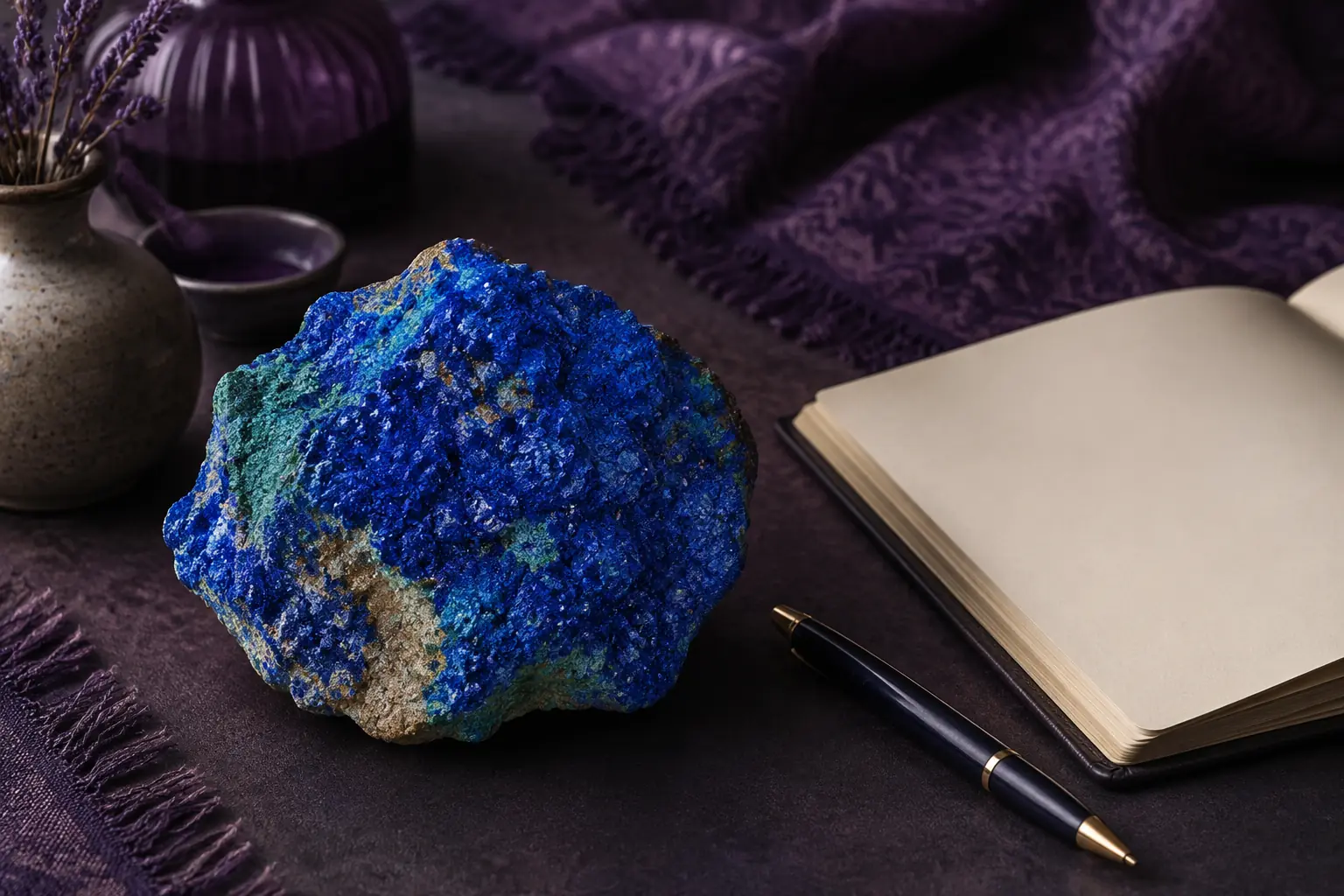
For example, you might hold azurite while meditating, place it beside a journal, or keep it near the place where you plan your day. Meditation is listening, and the stone can act as a simple reminder to become quiet. A journaling ritual can be just as easy: look at the natural lines and colors, write down what catches your attention, and let the thought develop without forcing it.
At the same time, azurite does not have to be part of a formal practice. Its strong color can mark a space as intentional without making the room feel overly arranged. If you are new to crystals, begin with the method that feels comfortable. Afterward, notice whether the routine helped you pause, focus, or reflect.
Color From the Earth
What Makes Azurite So Distinctive?
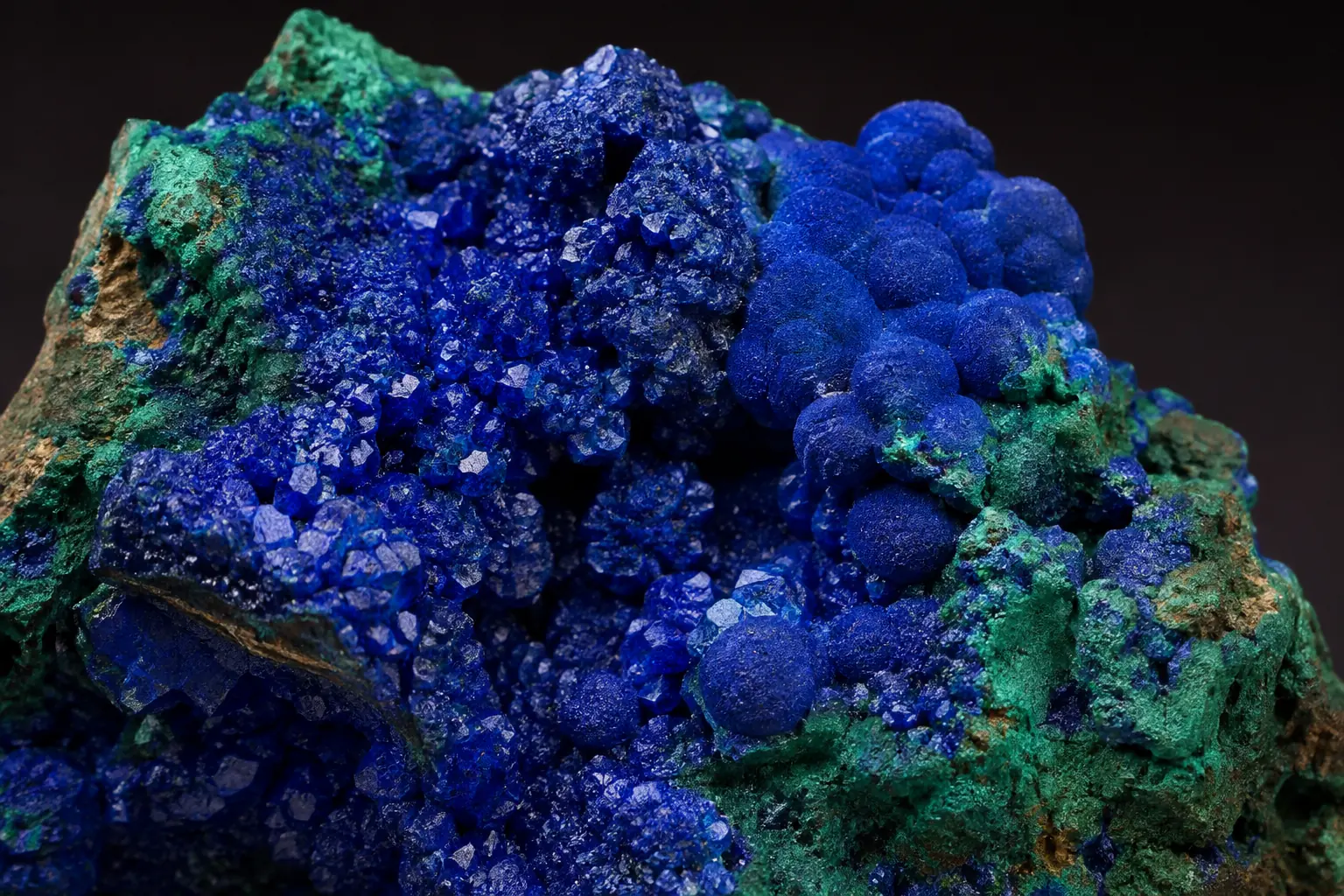
Azurite is a copper carbonate mineral known for rich shades that range from bright azure to deep navy blue. In addition, green malachite may appear beside or within the blue, creating a combination that feels almost painted. The two minerals are closely related, and their meeting points often create the most interesting parts of a specimen.
According to Mindat’s azurite mineral reference, azurite has a Mohs hardness of about 3.5 to 4. Because it is relatively soft, a natural specimen or detailed carving deserves thoughtful placement and careful handling.
Each surface carries its own color, texture, and markings, so no two pieces look exactly alike. That variety is part of the appeal. Some people love rough mineral formations, while others prefer a carving that reveals new bands of color as it turns.
Make It Your Own
How to Use Azurite at Home
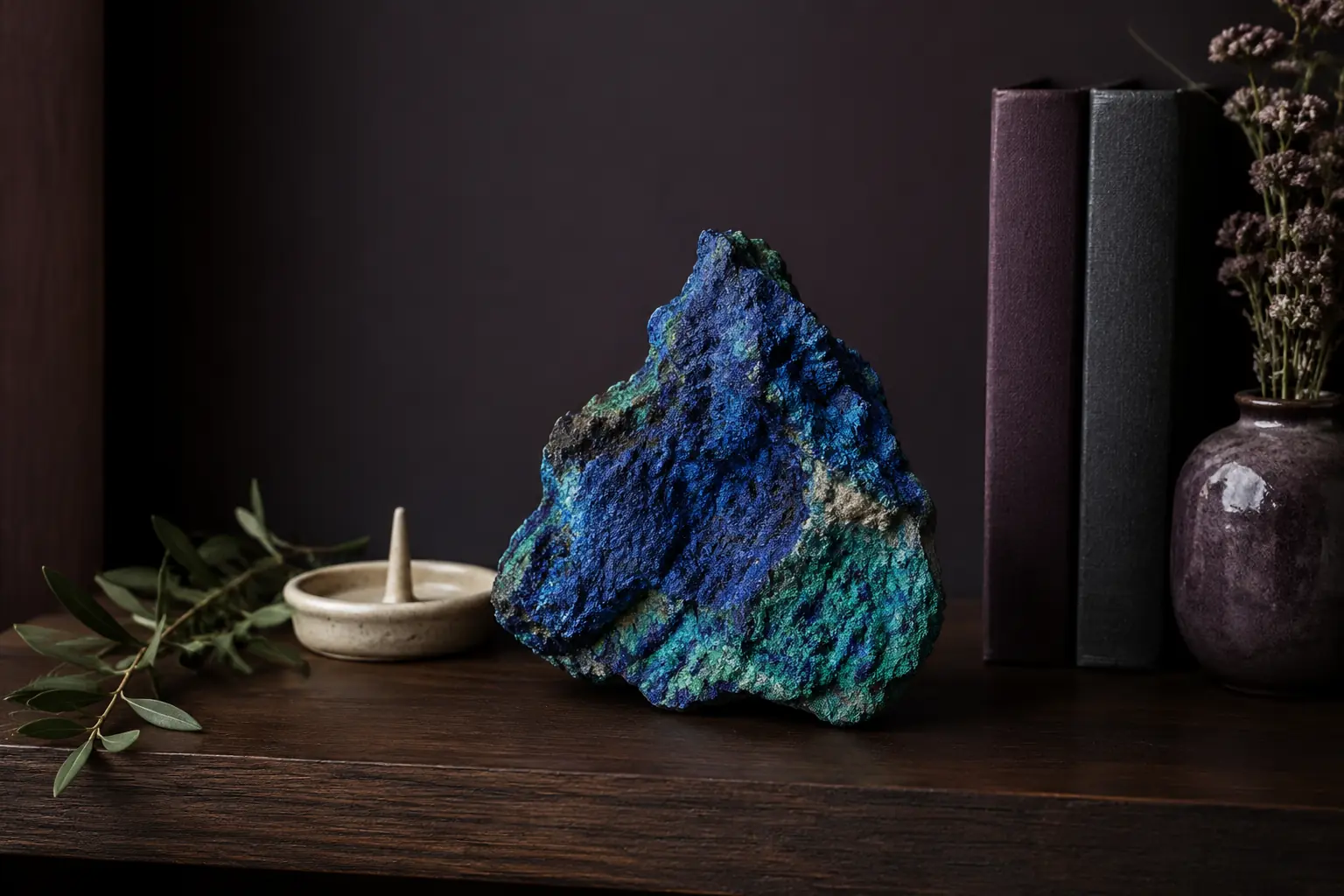
Azurite works beautifully in places connected with reflection, creativity, or quiet routines. For instance, a small piece near a journal can signal that it is time to write, while a carving on a reading shelf can add depth and color. A desk, meditation area, nightstand, or closed display cabinet can all work well.
For display, give azurite a little breathing room. Meanwhile, gentle indirect light will reveal its texture better than harsh glare. Turn the piece occasionally so you can enjoy the finish, color, and carving from another angle.
You might place it near other meaningful objects, incense holders, or thoughtful gifts. Still, avoid crowding it with too many competing shapes. Instead, let the stone remain the visual focus and build the display around it. The goal is not to make every corner feel mystical. It is simply to create a spot that feels considered and personal.
Find Your Piece
Choose the Azurite That Feels Right
Choosing azurite does not require a perfect spiritual reason. Color, shape, craftsmanship, and personal connection are enough. If this blue stone feels right for your space, explore the Azurite carving from Stones In Glass Houses and compare its natural details from every angle. Most importantly, choose the piece that genuinely calls to you.